The two-minute walkthrough
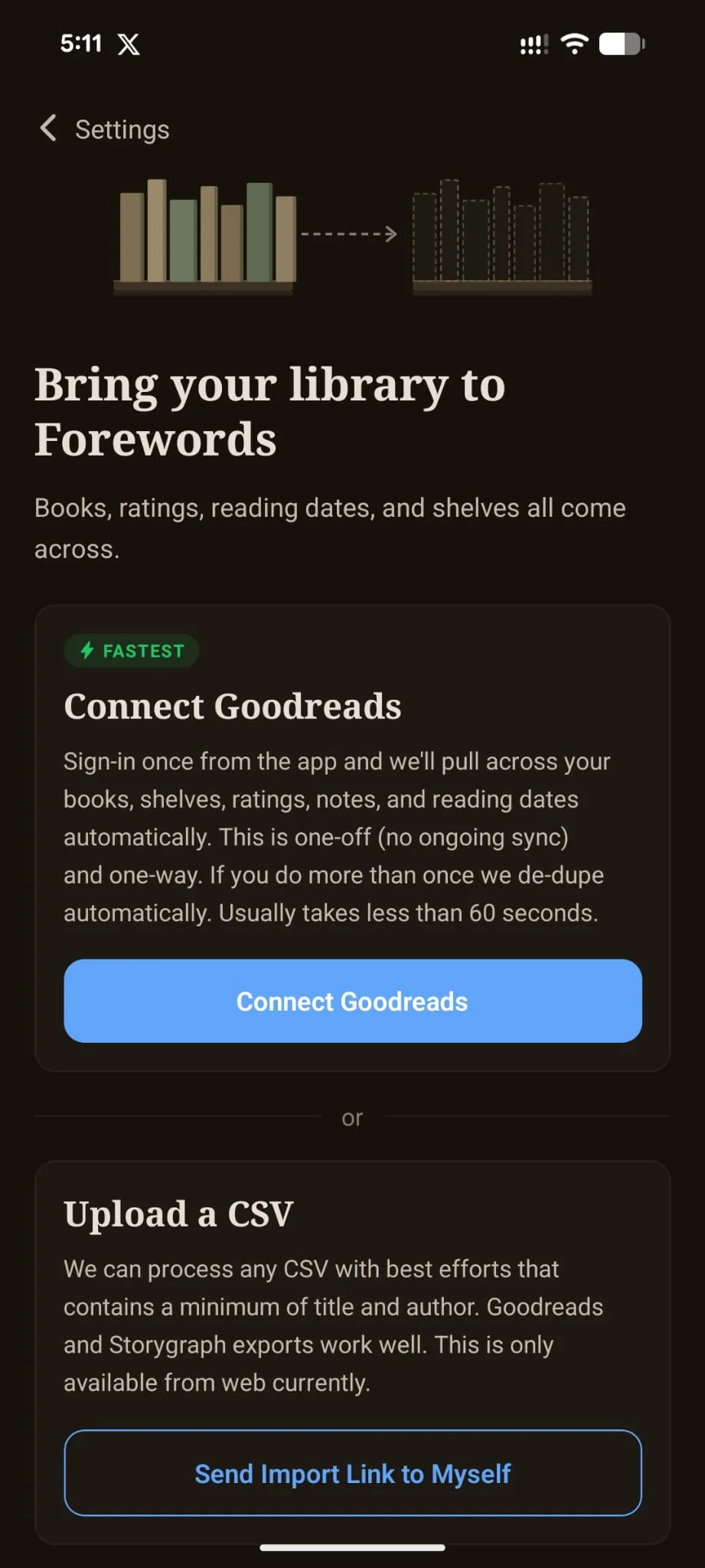
Most people who land here want to export their Goodreads library as a file and import it somewhere new. Path A below is the classic export-from-Goodreads workflow: download a CSV from goodreads.com, upload it to Forewords, done. Path B is a faster option that skips the export entirely — sign into Goodreads inside Forewords and your library transfers in one tap. Pick whichever feels right.
Path A · Export from Goodreads, upload to Forewords
Step 1: Export your Goodreads library
- 1.On goodreads.com (web only — the export option isn’t in the Goodreads mobile app), sign in and go to My Books → Import and export.
- 2.Click Export Library. Goodreads generates a CSV file containing every book in your library, your ratings, shelves, read dates, and reviews. It usually finishes in seconds, sometimes a minute for large libraries.
- 3.Download the CSV file to your computer when Goodreads finishes processing.
Step 2: Upload the CSV to Forewords
- 4.On web, sign into forewords.app/import-my-library and upload the Goodreads CSV. (Inside the Forewords app, tap Send Import Link to Myself to get the upload link by email — CSV upload is web-only today.) Forewords recognises the standard Goodreads CSV columns automatically; no column mapping needed.
- 5.Confirm the preview and the import runs. Your books, ratings, shelves, read dates, and Goodreads reviews (as Forewords notes) all transfer.
Path B · Skip the export — one-tap WebView import (fastest)
Use the in-app WebView import
- 1.In Forewords, tap Settings → Import your Library → From Goodreads.
- 2.A sandboxed WebView opens to the Goodreads sign-in page. Sign in with your existing Goodreads credentials. Forewords doesn’t see your password — it never leaves the WebView.
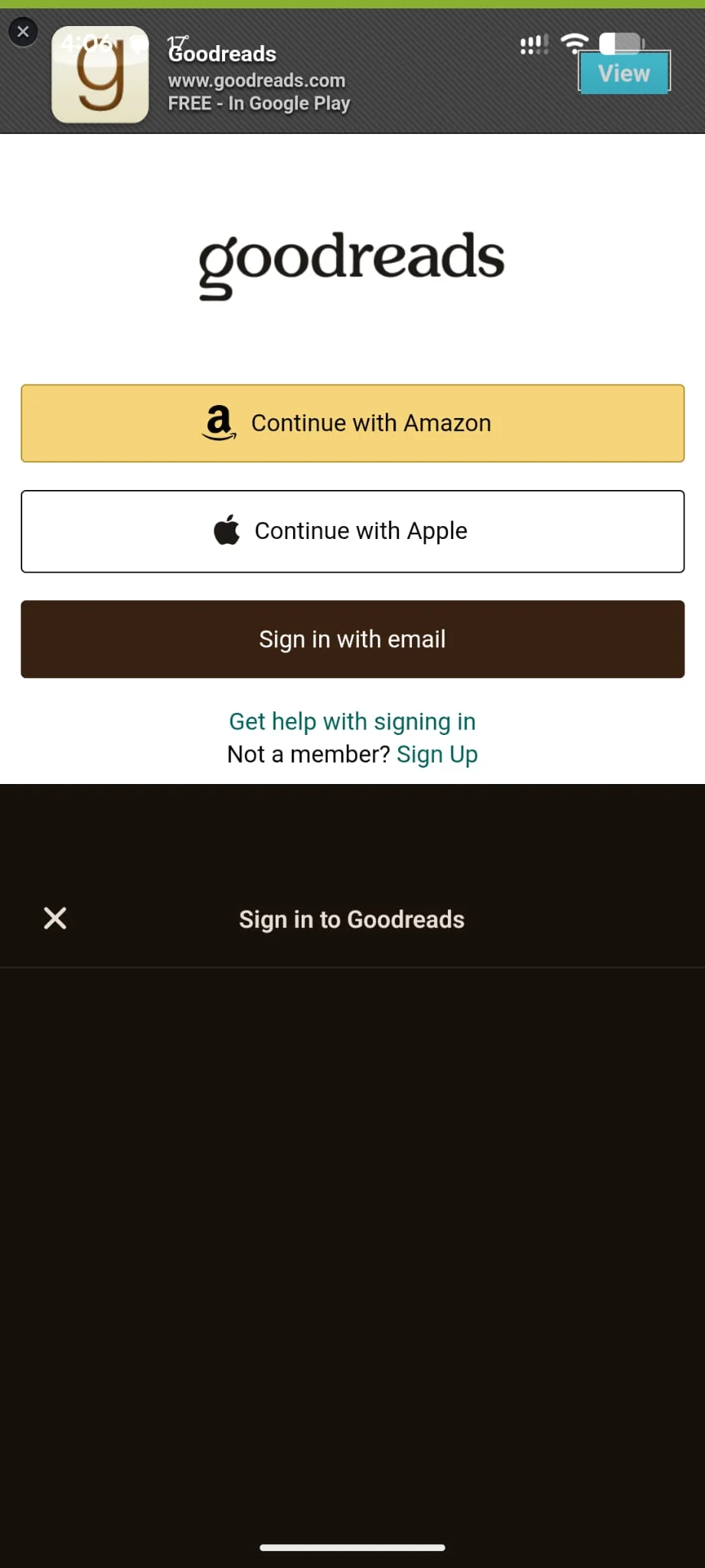
- 3.Once signed in, Forewords pulls down your shelves (Read, Currently Reading, Want to Read, plus any custom shelves), your ratings, your read dates, and any reviews you’ve left.
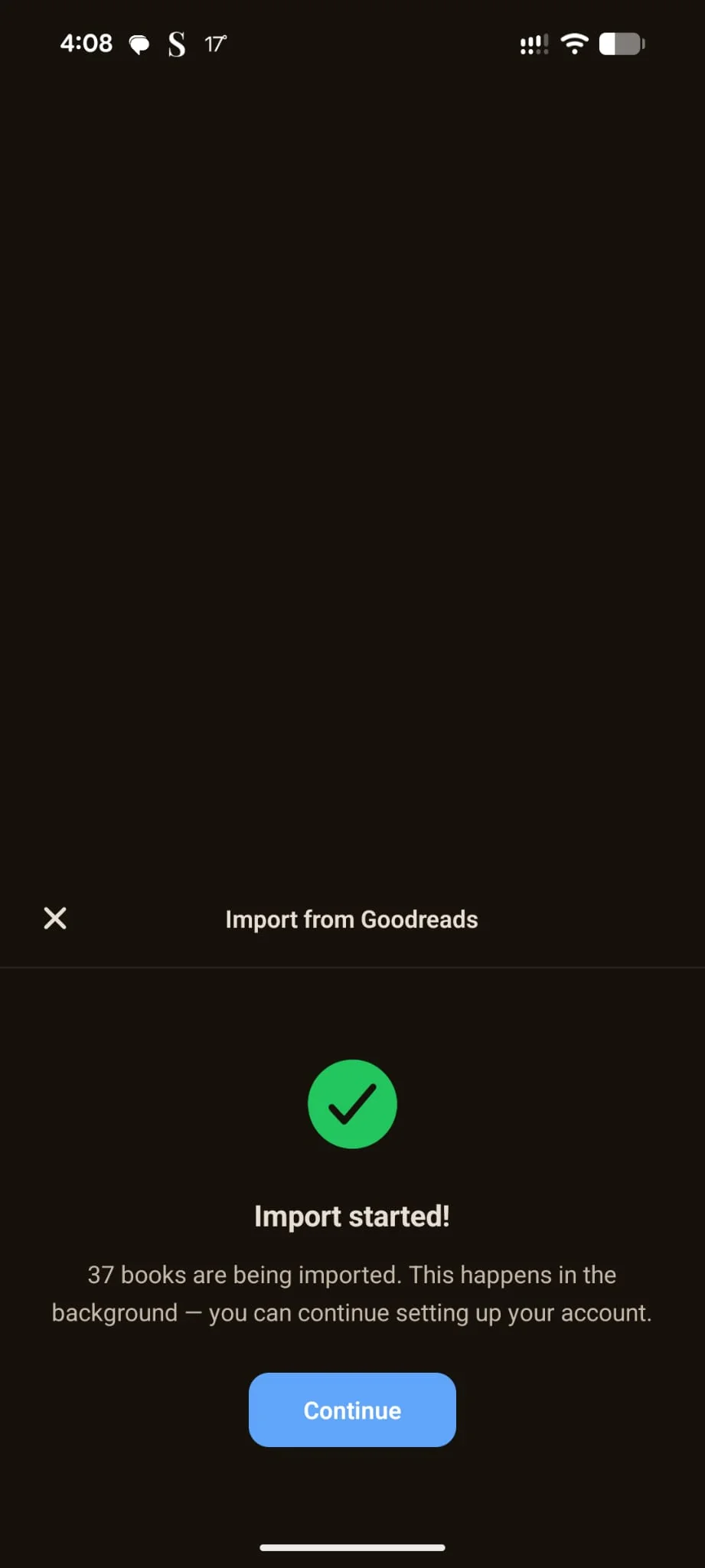
- 4.Tap Continue. Forewords hands the import off to the background, so you can keep setting up your account or browse the rest of the app while it processes. Libraries up to a few hundred books typically finish in under 90 seconds; a few thousand books takes a few minutes. You’ll get a notification when it’s done.
What transfers, and what doesn’t
- Transfers cleanly
- Every book in your shelves, your star ratings (Goodreads only supports whole stars; Forewords preserves them and lets you add half-star precision afterwards), read dates, date added, your custom shelves (mapped to Forewords’s custom shelves), your Goodreads reviews (imported as Forewords notes), and any Private Notes you’ve left on Goodreads (concatenated to the review with a
|separator inside the same notes field). - Doesn’t transfer
- Your friends and follows — Forewords doesn’t have a social graph. Your reading challenge progress — Forewords doesn’t have annual challenges yet (on the roadmap).
- After the import
- Forewords’s recommendation engine starts building your taste profile. The first useful recommendations appear once you have around 15–30 rated books, and they sharpen considerably from there. To give the engine more signal up front, this is the right moment to add a few per-trait rating tags on books you remember well.
Edge cases
- Very large libraries (2,000+ books)
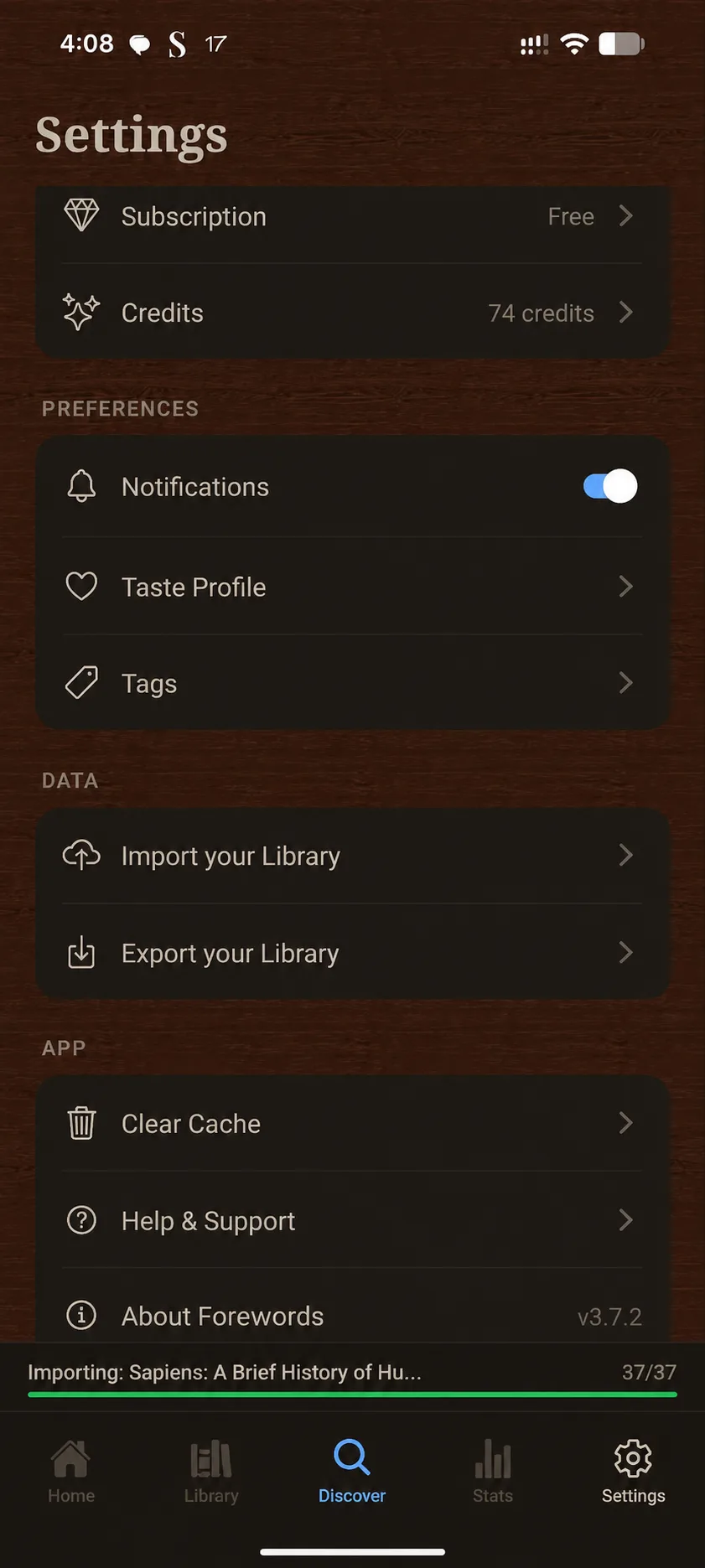
- The import paginates and runs in the background. It may take a few minutes. You can leave the screen — a thin progress bar follows you around the app while it works, and Forewords pings you when it’s done.
- Books that don’t match the catalogue
- Older imports without ISBNs, self-published titles, or region-specific editions sometimes don’t auto-match. Forewords flags these in a review screen and you can confirm the right edition manually. Usually fewer than 1% of a typical library.
- Re-running the import
- If you import twice (or run it again after adding more books to Goodreads), Forewords de-dupes by ISBN and by title + author so you don’t get duplicates.
- Two-factor on Goodreads
- The WebView handles 2FA the same way the regular Goodreads site does — enter the code, the import continues.
- Want your Goodreads account untouched?
- Importing into Forewords doesn’t modify your Goodreads library at all — it’s a read-only pull. Many readers keep both accounts active for a while and decide later.
Ready to try it? Install Forewords on iPhone or Android.
Related questions
- →Is Forewords free?
- →How much does Forewords cost?
- →Does Forewords work on iPhone?
- →Does Forewords work on Android?
- →How do Forewords's AI recommendations work?